

Australian households are currently facing a significant shift in how they manage energy. With electricity tariffs climbing and gas supplies becoming a topic of national debate, the days of ignoring the utility bill are over. When you look at where your energy money goes, water heating is often the biggest culprit, accounting for a massive chunk of the average home’s energy use.
For decades, the standard solution was a simple electric storage tank or a gas continuous flow unit. But recently, a new contender has taken center stage: heat pump hot water systems. You have likely seen them advertised, heard friends talking about them, or noticed the government pushing incentives for them.
The promise is alluring—massive reductions in running costs and a smaller carbon footprint. But the upfront cost is generally higher than traditional units. This leads to the inevitable question: is the investment actually worth it? To give an honest answer, we need to strip away the marketing hype and look at the mechanics, the mathematics, and the reality of living with this technology in the Australian climate.
Understanding the Technology: The “Reverse Fridge”
To decide if heat pump hot water systems are right for you, you first need to understand how they differ from what you probably have now. Traditional electric heaters work like a giant kettle. They use electricity to power an element that sits inside the water, creating heat through resistance. It is reliable, but it is chemically inefficient. For every unit of electricity you put in, you get one unit of heat out.
A heat pump works on a completely different principle. It does not create heat; it moves it. Think of your kitchen refrigerator. It works by extracting heat from inside the box (keeping your milk cold) and dumping that heat out the back into your kitchen.
A heat pump does this in reverse. It uses a fan to draw in ambient air from outside your home. It passes this air over an evaporator containing a refrigerant. This refrigerant absorbs the warmth from the air—even on a cold day—and turns into a gas. A compressor then squeezes this gas, which causes its temperature to skyrocket. This intense heat is then transferred to the water in the tank.
Because the electricity is only used to run the fan and the compressor, not to create the heat itself, the efficiency is incredibly high. Modern systems can produce three to four units of heat for every single unit of electricity they consume. This efficiency gap is where the savings live.
The Real-World Savings
When we talk about whether these systems are “worth it,” the conversation always comes back to the running costs. In a typical Australian home, switching from a standard electric storage unit to a heat pump can reduce the energy used for hot water by up to seventy percent.
Over the course of a year, this difference is substantial. For a family of four, the savings often amount to hundreds of dollars annually. While the initial purchase price of heat pump hot water systems is higher than a standard tank, the “payback period”—the time it takes for the savings to cover the extra cost—is becoming shorter every year. Once that period is passed, the system is essentially putting money back in your pocket compared to the alternative.
The Solar “Sponge” Effect
The financial argument becomes even stronger if you have rooftop solar panels. One of the challenges with solar is using the energy when it is being generated (usually the middle of the day) rather than sending it back to the grid for a low feed-in tariff.
Heat pump hot water systems act as a “thermal battery.” You can program the unit to run its heating cycle between 10 AM and 3 PM. During this window, it runs off the free electricity your roof is generating.
Because the heat pump draws such low power compared to a resistive element, it is unlikely to exceed the output of your solar inverter. This means you are heating your water for free. The highly insulated tank then stores this thermal energy, keeping the water hot for your evening showers and the next morning.
Performance in Australian Conditions
A common myth persists that heat pumps stop working when it gets cold. While this was true for early models from twenty years ago, modern units are engineered differently.
Australia has a diverse climate, from the humidity of Queensland to the frost of Tasmania. Quality heat pump hot water systems are designed to extract heat from the air even when the temperature drops below freezing. When the air is very cold, the system might work a little harder or take a little longer to recover, but it will still provide hot water.
Premium units come with active defrost functions. If frost builds up on the evaporator coils during a Canberra winter night, the unit reverses its cycle for a moment to melt the ice before continuing to heat the water. For the vast majority of Australians living in coastal or metropolitan areas, the ambient temperature is well within the optimal range for these machines year-round.
Installation and Space
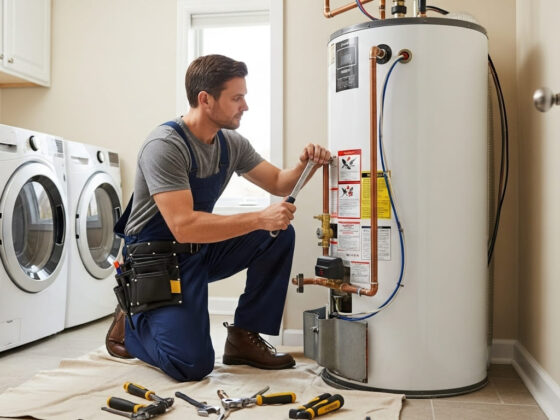
One of the practical benefits of these systems is the ease of installation. If you are replacing an old electric tank, the infrastructure is usually already there. Heat pump hot water systems generally use the same plumbing connections and electrical circuits as a standard electric tank.
This makes them a “drop-in” replacement. Unlike switching to gas, which requires running new gas pipes, or switching to roof-mounted solar thermal, which requires reinforcing the roof, a heat pump sits on the ground.
There are two main configurations to consider:
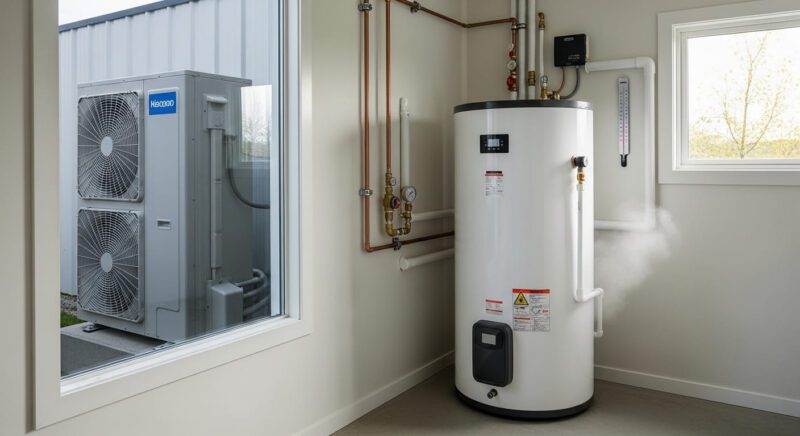
- Integrated Units: The compressor sits directly on top of the storage tank. These look like a tall fridge and are great for compact footprints.
- Split Systems: The tank is separate from the compressor unit. The compressor looks like an air conditioner outdoor unit and can be mounted on a wall nearby. This is useful if you have limited vertical height.
Noise Considerations
Because a heat pump uses a fan and a compressor, it makes a sound. It is not silent like a resistive electric tank. However, the noise level of modern units is quite low, comparable to a quiet conversation or a modern refrigerator hum.
When planning your installation, placement is key. You should avoid placing the compressor unit directly outside a bedroom window or right next to a neighbour’s fence in a narrow courtyard. A professional installer will help position the unit to ensure it complies with local noise regulations while maintaining good airflow.
Government Incentives Driving Value
The Australian government is actively encouraging the move away from inefficient appliances. To support this, there is a system of rebates known as Small-scale Technology Certificates (STCs).
When you install a qualified heat pump, you generate these certificates based on the energy savings the unit will provide over its lifespan. These certificates have a monetary value and are usually traded by the installer to give you a point-of-sale discount.
Depending on your location and the size of the system, this rebate can knock a significant chunk off the upfront cost. Some states, like Victoria with its Solar Homes Program, offer additional rebates on top of the federal STCs. When you combine these incentives with the annual running cost savings, the financial argument for heat pump hot water systems becomes undeniable.
Environmental Impact
Beyond the wallet, there is the planet. Residential water heating is a major contributor to greenhouse gas emissions. By slashing the energy required to heat water, you are directly reducing your carbon footprint.
Furthermore, as the electricity grid becomes greener with more wind and solar farms coming online, your electric heat pump becomes cleaner over time. A gas hot water system will always burn fossil fuels. An electric heat pump has the potential to be zero-emission, especially when paired with your own solar panels.
Questions and Answers: Common Questions About heat pump hot water systems in Australia
Q: Will a heat pump work on a cloudy day?
Yes. This is a common confusion with “solar thermal” panels. Heat pump hot water systems do not need direct sunlight. They need ambient heat from the air. Even on a cloudy, rainy day, the air temperature is usually sufficient for the refrigerant to do its job. The system works day and night, rain or shine.
Q: How long does a heat pump last?
A high-quality unit from a reputable manufacturer generally has a lifespan similar to a traditional electric water heater, typically between 10 to 15 years. The tank is usually stainless steel or vitreous enamel. The compressor is a mechanical part that may require maintenance, but with proper care, these systems are built for longevity.
Q: Is it difficult to switch from gas to a heat pump?
It is becoming a very common switch as people move away from gas connection fees. It requires a licensed plumber to cap off the gas line and an electrician to ensure there is a power supply to the heater location. While there is a bit more labour involved than a like-for-like swap, the long-term savings of disconnecting from the gas grid often justify the effort.
Q: Do I need a big tank?
Heat pumps heat water slower than a gas continuous flow unit. This means they rely on storage. It is generally recommended to get a tank size that covers your daily usage with a bit of a buffer. For a family of four, a 270L to 315L tank is standard. This ensures that even if everyone showers in the morning, the system has time to recover during the day.
Q: Does the unit need servicing?
Like any appliance with moving parts and fans, some maintenance is required. Keeping the air intake clear of leaves, dust, and spiderwebs is a simple task the homeowner can do. It is also recommended to have a professional check the system, including the pressure relief valves and the sacrificial anode (if the tank has one), every few years to ensure it is running at peak efficiency.
Conclusion: Your Path to a Successful heat pump hot water systems in Australia
The transition to smarter energy use is happening across the country, and water heating is the low-hanging fruit for most households. While the technology might seem complex compared to a simple kettle-style heater, the results are simple: lower bills and less energy waste.