

Ever walked into a bustling café or office with seamless, durable floors that handle foot traffic without a hitch? Commercial tilers make that happen, installing tiles that stand up to daily wear in high-use spaces. In Australia, where businesses thrive on open, inviting designs, commercial tilers create practical surfaces for shops, restaurants, and offices that fit our fast-paced, weather-exposed lifestyle. This guide covers what commercial tilers offer, how to choose them, and local tips to ensure your project succeeds, from coastal storefronts to inland warehouses.
What Commercial Tilers Bring to Business Spaces
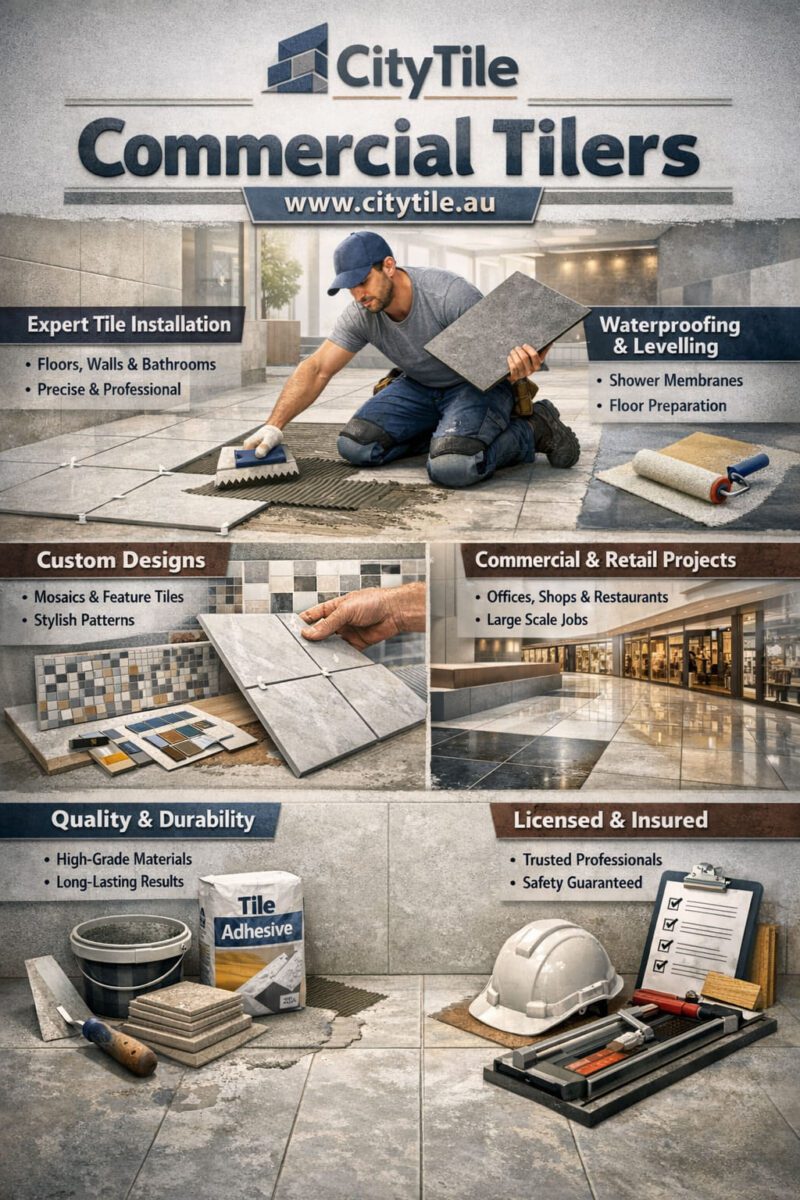
Commercial tilers focus on large-scale installations, using materials like porcelain, ceramic, or stone to cover floors, walls, and counters. They prepare surfaces, lay tiles with precision, and apply grout and sealants for a finished look. For Australian businesses, commercial tilers handle everything from retail shop floors to hospital corridors, ensuring non-slip safety and easy cleaning.

These pros work with heavy-duty tools to level uneven concrete or fix subfloors, vital in older buildings common in cities. Commercial tilers also integrate waterproofing for wet areas like kitchens or bathrooms, preventing slips in rainy seasons. Their work supports quick turnarounds, minimizing downtime for owners.
In multicultural hubs, commercial tilers incorporate patterns that reflect community vibes, like vibrant mosaics in food courts. They adapt to modern trends, such as large-format tiles for open-plan offices that reduce grout lines and dirt buildup.
Core Services from Commercial Tilers
Commercial tilers provide these key offerings:
- Floor Tiling: Durable coverings for high-traffic zones like entrances.
- Wall Cladding: Protective layers in kitchens or changing rooms.
- Waterproof Installs: Sealed systems for laundries or cafes.
- Repair and Maintenance: Fixing cracks or replacing worn sections.
- Custom Designs: Patterns or borders for branding in retail spaces.
These services make commercial tilers essential for functional, attractive interiors.
Benefits of Working with Commercial Tilers for Your Business
Hiring commercial tilers ensures longevity—tiles installed by pros resist cracking from heavy loads or vibrations in busy environments. In Australia, where heat and humidity test materials, their expertise prevents warping in coastal shops or dust buildup in dry inland stores.
Safety improves with anti-slip finishes, meeting workplace standards for customer and staff protection. Commercial tilers boost aesthetics, creating welcoming spaces that draw people in, like polished floors in Sydney cafes that reflect natural light. They save time too—efficient teams complete jobs without disrupting operations.
Culturally, commercial tilers support our love for al fresco dining and community events, tiling outdoor patios that handle barbecues or markets. Examples: A Melbourne restaurant used commercial tilers for a subway-patterned floor, hiding spills while adding urban charm. In Brisbane, tilers installed porcelain walls in a gym, withstanding sweat and steam in the subtropical climate.
Long-Term Value from Commercial Tilers
Quality work reduces future repairs, keeping costs down. It also enhances property appeal for leases or sales in competitive markets.
How to Choose the Right Commercial Tilers in Australia
Start by verifying experience—look for tilers with a track record in similar projects, like retail or hospitality. Ask about their process, from site assessments to cleanup, and request portfolios showing past commercial jobs.
Check licensing under state building regulations, ensuring compliance with the National Construction Code for safety and durability. Commercial tilers should detail how they handle dust control in occupied spaces or noise in urban areas.
Get references from local businesses to gauge reliability. In high-rises, choose tilers skilled in access challenges. Competitors range from specialized teams for large sites to versatile groups for mixed-use buildings.
Cultural considerations matter—in diverse areas, commercial tilers respect designs that honor local heritage, like incorporating native motifs in community centers. Examples: Perth office tilers used large slabs for a modern lobby, fitting the city’s growing business scene. In Adelaide, tilers clad a market hall with slip-resistant tiles, suiting the area’s food-focused culture.
Key Questions for Commercial Tilers
- How do you ensure minimal disruption during installs?
- What materials meet our local climate needs?
- Can you provide a timeline for completion?
These help select commercial tilers that align with your goals.
Local Regulations and Insights for Commercial Tilers
Australia’s regions guide commercial tilers’ work. In New South Wales, councils require permits for public-facing tilings to control runoff and accessibility. Queensland’s humidity demands vapor-permeable options to avoid trapped moisture in malls.
The Building Code sets standards for fire-rated tiles in high-rises, with states adding specifics like Victoria’s focus on earthquake-resistant bonds. Providers offer certified materials, while competitors emphasize green certifications for sustainable builds.
Cultural nuances include open layouts in cafes that commercial tilers enhance with seamless floors for social flow. In Indigenous business spaces, tilers use earth-toned designs to connect with land traditions.
Examples: Darwin commercial tilers waterproofed a hotel lobby for cyclone resilience, using flexible grout. Tasmania’s cool weather prompted insulated underlays in retail floors to prevent cold drafts.
For coastal salt, tilers select corrosion-proof sealants. Inland, dust-resistant finishes suit warehouses.
- Urban High-Traffic: Anti-slip in Sydney subways.
- Coastal Durability: Salt-tolerant in Cairns shops.
- Inland Heat: Reflective tiles in Alice Springs stores.
- Rural Versatility: Modular for outback community halls.
These adaptations make commercial tilers effective nationwide.
Questions and Answers: Common Questions About Commercial Tilers in Australia
Q: What licensing do commercial tilers need in Victoria?
Ans: They require builder registration for structural work. This ensures safe, compliant installs in the state’s busy commercial districts.
Q: How do commercial tilers handle humidity in Queensland malls?
Ans: They use breathable membranes under tiles to prevent mold. This keeps floors dry in tropical conditions, supporting high foot traffic.
Q: Are commercial tilers experienced with eco-materials in New South Wales?
Ans: Many specialize in recycled porcelain or low-VOC grouts. These suit Sydney’s green building push while providing durable surfaces.
Q: Can commercial tilers work in tight urban spaces in South Australia?
Ans: They use compact tools and phased installs for Adelaide shops. This minimizes disruption in crowded city environments.
Q: What about commercial tilers for outdoor patios in Western Australia?
Ans: They install weatherproof porcelain with drainage. This withstands Perth’s dry heat and occasional storms for al fresco areas.
Conclusion: Your Path to a Successful Commercial Tilers in Australia
Commercial tilers deliver strong stylish floors and walls through services like waterproofing and custom designs, tailored to high-traffic businesses. They follow local regulations for safety and durability, adapting to climates from humid tropics to dry interiors, while honoring cultural spaces for community and commerce. This guide outlines benefits, selection tips, and regional examples, showing commercial tilers’ role in creating inviting, long-lasting interiors that support Australia’s vibrant work and social scenes.