
Every home office and workplace ends up with the same pile: empty ink and toner cartridges stuffed in a drawer or cupboard. Many people assume the bin is the only option, or that recycling means paying a fee. In reality, full cartridge recycling for free is offered by manufacturers, retailers, and specialist collectors, and using one takes only a few minutes.
Why Used Cartridges Should Never Go in the Bin
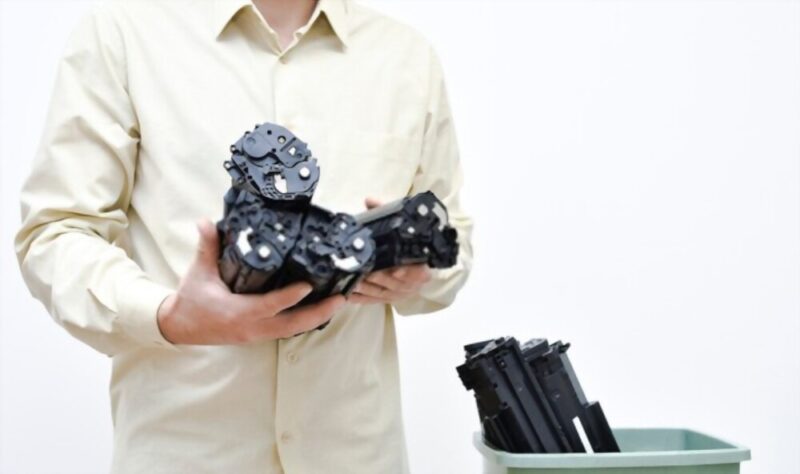
A cartridge is not a simple piece of plastic. It combines molded casing, metal parts, foam, electronic chips, and leftover ink or toner powder. When it is sent to landfill, the plastic can take hundreds of years to break down, and residual chemicals may seep into the soil.
Recycling keeps those materials in circulation. Casings can be cleaned and refilled, plastics can be ground down and molded into new products, and metals can be recovered. Every cartridge returned is one less item competing for landfill space.
What “Full” Cartridge Recycling Really Means
Some collectors take only the cartridge types that are easiest to resell. A full cartridge recycling service accepts the whole range: inkjet, laser toner, drum units, and often multi-color tanks, regardless of brand. Even cartridges that cannot be refilled are processed so their materials are recovered. The aim is that nothing you send ends up wasted.
This matters if you own a mixed set of printers. Instead of sorting by brand or checking which items qualify, you can bundle them together and send them in one go.

How Free Recycling Programs Work
Most free schemes follow one of these models:
- Prepaid return labels. You pack used cartridges into any box, attach a printable or supplied label, and post or hand them to a courier at no cost.
- Drop-off boxes. Office supply stores, electronics shops, and some libraries or community centers keep collection bins at the entrance.
- Manufacturer take-back. Several printer brands run their own return schemes and send you a label when you register or order new cartridges.
- Charity collection. Some schools and charities collect cartridges and receive a payment from the recycler, so your old cartridges fund a good cause.
Each model is free to you because the recycler profits from the recovered materials or from remanufacturing. That is why the service can stay free without compromising quality.
Step-by-Step: How to Recycle Your Cartridges for Free
- Collect. Keep a small box near your printer and drop empties in as you replace them.
- Check the program. Confirm which cartridge types and quantities are accepted, since some services set a minimum batch size.
- Pack safely. Place each cartridge in a bag or its original packaging to prevent leaks, then seal everything in a sturdy box.
- Label and send. Attach the prepaid label or take the box to your nearest drop-off point.
- Keep a record. If you run a business, ask for a recycling confirmation for your sustainability reporting.
Benefits for Households and Businesses
For households, the main appeal is convenience. You clear clutter, avoid disposal fees, and do something useful with an item that would otherwise sit unused.
For businesses, the advantages go further. A regular recycling routine supports environmental policies, helps meet waste-reduction goals, and shows clients and staff that the company takes responsibility seriously. Some programs also provide reports on how many cartridges were diverted from landfill, which is useful for annual sustainability updates.
There is also a cost angle. When disposal is free, you stop paying for waste collection of bulky or hazardous items. Some collectors even offer credits or donations toward your next order, so a recycling habit can lower your supply costs over time.
Tips for Getting the Most Out of a Free Program
- Recycle quickly. Cartridges that dry out are harder to refill, so do not leave them for months.
- Avoid shaking or squeezing. Residual toner can spill and make a mess.
- Do not mix in other waste. Batteries, paper, or general trash can contaminate the shipment and may cause it to be rejected.
- Choose responsible recyclers. Look for providers that explain what happens to the cartridges after collection and that follow recognized environmental standards.
- Encourage others. Share the habit with colleagues, neighbors, or your local school to increase the impact.
Common Myths About Cartridge Recycling
“It costs money.” Many services are completely free for standard quantities, as the recycler covers transport and handling.
“Only branded cartridges are accepted.” Many programs take compatible and third-party cartridges as well.
“It takes too much effort.” With a prepaid label, the whole process takes less time than a trip to the supermarket.
“Recycled cartridges print badly.” Remanufactured cartridges are tested to meet quality standards, and many users cannot tell the difference.
Make It a Habit
Print jobs come and go, but the cartridges you use pile up quickly. Taking advantage of full cartridge recycling for free turns a small annoyance into a simple routine: collect, pack, send, done. You reduce landfill waste, support a circular economy, and may even help a charity along the way.
The next time a cartridge runs dry, do not toss it. Find a free program near you and give it a second life. It costs nothing, and the planet benefits from every cartridge you return.