

Are you tired of watching your energy bills skyrocket every winter? Have you ever wondered if there’s a more cost-effective way to keep your home warm during those chilly Australian nights? Perhaps you’ve considered a wood heater but aren’t quite sure if it’s the right choice for your household?
You’re not alone. Thousands of Australian homeowners are rediscovering the appeal of wood heating, and for good reason. Wood heaters offer a unique combination of reliable warmth, energy independence, and that unmistakable cosy ambiance that electric and gas systems simply can’t replicate. Plus, with modern technology making them more efficient than ever, they’re becoming an increasingly attractive option for families across the country.
In this article, we’ll explore everything you need to know about wood heaters for Australian homes. From understanding how they work and their key benefits to choosing the right size and brand for your space, we’ve got you covered. We’ll also tackle common concerns about health and environmental impact, so you can make an informed decision about whether a wood heater is right for your family.
What Is a Wood Heater and How Does It Work?
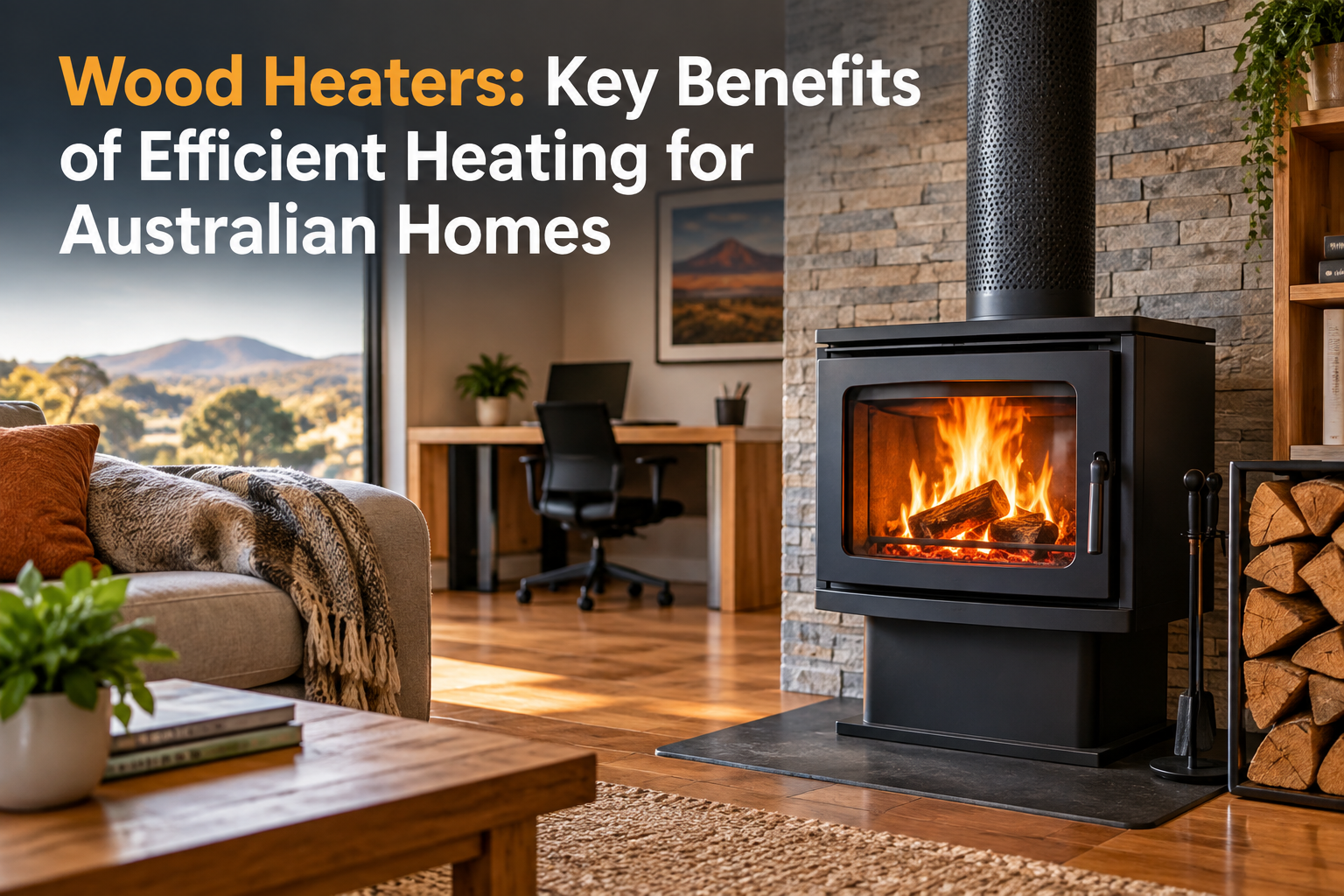
A wood heater is essentially a controlled combustion appliance that burns firewood to generate heat for your home. Unlike open fireplaces, modern wood heaters are enclosed units designed to maximise heat output while minimising smoke and emissions. The fire burns inside a sealed firebox, and the heat radiates outward through the heater’s body and into your living space.
Types of Wood Heaters Available in Australia
Australian homeowners can choose from several wood heater styles. Freestanding models sit on a hearth and radiate heat in all directions, making them ideal for open-plan living areas. Built-in or insert heaters fit into existing fireplace openings, perfect if you want to upgrade an old, inefficient fireplace. There are also slow combustion heaters, which burn fuel more gradually for extended heat output.
Understanding Combustion Efficiency Ratings
Efficiency ratings tell you how much of the wood’s energy converts to usable heat. Modern Australian wood heaters typically achieve efficiency ratings between 60% and 80%. The higher the rating, the more heat you get from each log and the less smoke produced. Look for heaters that meet Australian Standard AS/NZS 4012, which guarantees minimum efficiency and emission requirements.

Key Benefits of Wood Heaters for Australian Homes
Cost-Effective Heating: Saving Money on Energy Bills
One of the biggest drawcards of wood heating is the potential for significant savings. Firewood is often considerably cheaper than electricity or gas, particularly if you have access to free or low-cost wood from your property or local suppliers. Many families report cutting their winter heating costs by half or more after switching to a wood heater.
Reliable Warmth During Cold Australian Winters
Wood heaters produce radiant heat that warms you to the bone. Unlike ducted systems that can feel artificial, the warmth from a wood fire feels natural and penetrating. Whether you’re in the Snowy Mountains or Melbourne’s suburbs, a quality wood heater delivers consistent, reliable warmth when you need it most.
Energy Independence and Off-Grid Heating Solutions
Power outages during storms? No worries. Wood heaters operate completely independently of the electricity grid, making them perfect for rural properties or anyone wanting energy security. You control your heating supply, and you’re not at the mercy of rising utility prices or infrastructure failures.
Environmental Benefits of Modern Wood Heating
When sourced sustainably, firewood is a renewable fuel that’s carbon-neutral. Trees absorb carbon dioxide as they grow, then release it when burned—creating a closed loop. Modern low-emission heaters burn so cleanly that their environmental impact is minimal compared to older models.
Creating Ambiance and Adding Value to Your Home
Let’s be honest—nothing beats the atmosphere of a real fire. The dancing flames, the gentle crackle, and that distinctive woodsy aroma create a feeling of warmth and comfort that’s impossible to replicate. What’s more, a well-installed wood heater can boost your property’s appeal and value.
Are Wood Heaters Cheaper to Run Than Gas or Electric Heating?
The short answer? Usually, yes. Running costs depend on several factors, including local firewood prices, your heater’s efficiency, and how well-insulated your home is. However, firewood typically costs between $150 and $300 per tonne in most Australian regions. A well-maintained wood heater burning quality hardwood can heat an average home for an entire winter on two to four tonnes of wood.
In comparison, gas heating can cost $400 to $800 per winter for a similar-sized space, while electric heating often runs even higher. The savings add up quickly, especially over several years. Just keep in mind that initial purchase and installation costs for wood heaters tend to be higher upfront.
Is a Wood Heater Worth It in Australia?
For many households, absolutely. If you live in a cooler climate zone, spend significant amounts on winter heating, or simply love the idea of a real fire, a wood heater makes solid financial and lifestyle sense. They’re particularly worthwhile for those with access to affordable firewood and homes with good insulation.
That said, they’re not ideal for everyone. If you’re rarely home during winter, live in a small apartment, or have respiratory conditions sensitive to smoke, other heating options might suit you better.
Choosing the Right Wood Heater for Your Home
What Size Wood Heater Do I Need for My House?
Sizing matters enormously. A heater that’s too small won’t adequately warm your space, while one that’s too large might overheat rooms and waste fuel. As a general guide, you’ll need approximately 1kW of heating capacity per 10 square metres of floor space. A typical three-bedroom home of around 150 square metres would need a 15kW heater. Consider factors like ceiling height, insulation quality, and climate when calculating.
Freestanding vs Built-In Wood Heaters: Which Is Best?
Freestanding heaters offer flexibility in placement and typically radiate heat from all sides, making them efficient for open-plan living. Built-in models look sleeker and save floor space, making them great for renovations or smaller rooms. Your choice depends on your home’s layout and aesthetic preferences.
Best Wood Heater Brands in Australia
Several reputable brands dominate the Australian market. Nectre, Scandia, Masport, and Eureka are all well-regarded for quality, efficiency, and durability. European brands like Jøtul and Morso offer premium options. Always check that your chosen heater meets Australian standards and comes with a solid warranty.
What Is the Most Efficient Wood Heater on the Market?
Currently, catalytic and secondary combustion heaters top the efficiency charts, often exceeding 75% efficiency ratings. Brands like Cleanair and Nectre have models specifically designed for maximum heat output with minimal emissions. Look for heaters certified to meet strict Australian emission standards—these models burn cleaner and extract more heat from every log.
Installation and Compliance Requirements in Australia
Australian Standards and Local Council Regulations
All wood heaters must comply with Australian Standard AS/NZS 4013 for emissions and AS/NZS 4012 for efficiency. Many local councils have additional regulations regarding installation, flue heights, and setback distances from boundaries. Some areas, particularly in urban zones with air quality concerns, may have restrictions on wood heater installations.
Professional Installation: What to Expect
Always use a licensed installer. Professional installation ensures compliance with building codes and fire safety requirements. Expect the process to include flue installation, hearth construction if needed, and final certification. Typical installation costs range from $500 to $1,500, depending on complexity.
Maintaining Your Wood Heater for Optimal Efficiency
How Often Should a Wood Heater Be Serviced?
Annual servicing is recommended before each winter season. A professional service includes chimney sweeping, inspecting door seals and gaskets, checking the baffle plate, and ensuring all components function correctly. Regular maintenance keeps your heater running efficiently and safely.
Choosing the Right Firewood for Maximum Heat Output
Hardwoods like red gum, ironbark, and jarrah burn longer and hotter than softwoods. Always use seasoned firewood—wood that’s been dried for at least 12 months. Wet or green wood produces more smoke, less heat, and accelerates creosote buildup in your flue.

Common Concerns About Wood Heaters Answered
Are Wood Heaters Bad for Your Health?
When operated correctly with dry, seasoned wood, modern wood heaters pose minimal health risks. Problems arise from burning inappropriate materials, poor maintenance, or inadequate ventilation. Keeping your heater well-maintained and using quality firewood minimises any concerns.
Do Wood Heaters Cause Air Pollution?
Older heaters contributed significantly to winter air pollution. However, modern low-emission heaters meeting current Australian standards produce far less particulate matter. Proper operation—burning hot fires with dry wood—further reduces emissions substantially.
Is a Wood Heater Right for Your Australian Home?
Wood heaters offer Australian homeowners a compelling combination of cost savings, energy independence, and genuine comfort that’s hard to match. From slashing winter heating bills to providing reliable warmth during power outages, the benefits are clear and tangible.
The key is choosing the right heater for your space, ensuring professional installation, and committing to proper maintenance. With quality firewood and regular servicing, a wood heater can serve your family efficiently for decades while adding warmth and character to your home.
So, is a wood heater worth it? If you’re seeking an affordable, reliable, and atmospheric heating solution, the answer is a resounding yes. Why not explore your options and discover the difference a real fire can make this winter?