

Air conditioning is more than a comfort gadget; it’s a key part of everyday life for many Australians. From the scorching heat of the outback to the humid evenings on the coast, a well installed system keeps homes and businesses cool, healthy, and energy efficient. In this guide we’ll explore why hiring a professional for air conditioning installation matters, what local rules you need to know, and how to choose the right system for Australian conditions. We’ll also answer the most common questions Australians ask about air conditioning, so you can make an informed decision and enjoy a reliable, cost effective solution.
Why Professional Installation Matters
“A professional air conditioning installation benefits include technical knowledge, safety awareness, and experience that a DIY approach simply can’t match. Incorrect wiring, poor refrigerant handling, or an improperly sized unit can lead to higher energy bills, reduced cooling performance, and even safety hazards. In Australia, the standards for air conditioning installation are strict for a reason: they protect both the consumer and the environment.”
Optimal System Sizing
Proper sizing is crucial. An oversized air conditioning unit will cycle on and off too quickly, wasting electricity and causing wear on the compressor. An undersized unit will struggle to reach the desired temperature, leading to constant operation and higher costs. Professionals use a Manual J load calculation that takes into account:
- Floor area and ceiling height
- Orientation of windows and shading
- Local climate zone (e.g., tropical north, temperate south)
- Insulation levels and building materials
- Occupancy patterns and internal heat gains
Quality of Installation
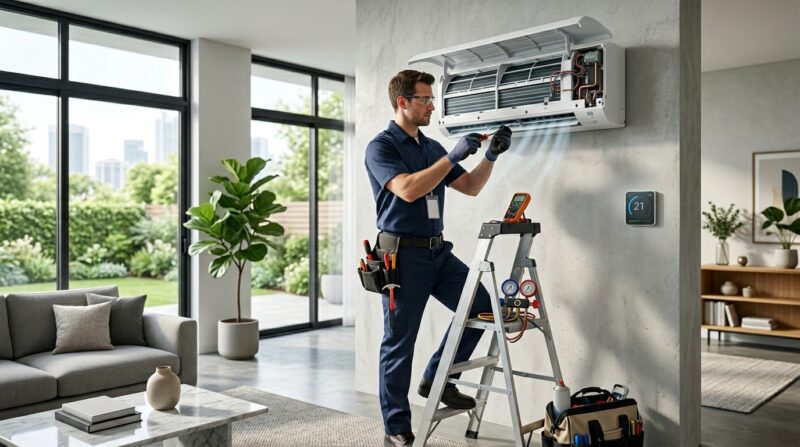
A professional installer ensures that ductwork is sealed, refrigerant lines are insulated, and the thermostat is placed for accurate temperature reading. They also verify that the outdoor unit has adequate clearance for airflow and that the indoor unit is mounted securely to avoid vibration and noise.
Australian Regulations and Standards
Australia’s climate varies dramatically from region to region, and so do the regulations governing air conditioning. Understanding these rules helps you avoid costly reworks and ensures your system runs efficiently for years.
National Standards
- AS/NZS 3666– Management of indoor air quality in ventilation and air conditioning systems.
- AS/NZS 3000– Electrical installations (the “Wiring Rules”).
- Australian Refrigeration Code– Controls the use of refrigerants with high global warming potential.
State and Territory Requirements
Each state may have additional licensing or certification steps. For example:
- New South Wales – Requires a licensed air conditioning contractor to register with SafeWork NSW.
- Victoria – Mandatory energy efficiency labeling (EER) for all new installations.
- Queensland – Requires a Building Approval for split system installations in certain zones.
- Western Australia – Emphasises compliance with the Building Code of Australia (BCA) for ventilation.
Energy Efficiency Incentives
Many Australian states offer rebates for high efficiency air conditioning units. The Federal Government’s Small Scale Renewable Energy Scheme (SSRES) also provides incentives for systems that meet specific energy star ratings. A professional installer can help you navigate these programs and ensure you claim any eligible rebates.
Choosing the Right System for the Australian Climate
Australia’s climate zones range from hot and dry desert areas to humid tropical coasts. Selecting the right type of air conditioning makes a big difference in comfort and running costs.
Split System Air Conditioning
- Ideal for most residential homes.
- Provides both cooling and heating (reverse cycle).
- Easy to install in existing houses without major ductwork.
Multi Split and Ducted Systems
- Best for larger homes or commercial spaces.
- Allows multiple indoor units to be connected to a single outdoor condenser.
- Provides consistent temperature throughout the building.
Evaporative (Swamp Coolers) vs. Traditional AC
In dry inland areas, evaporative cooling can be a cost effective alternative, but it is not suitable for humid coastal regions where traditional refrigerant based air conditioning delivers better performance.
Smart Controls and Zoning
Modern air conditioning units often include Wi Fi enabled thermostats, allowing you to control temperature from a smartphone. Zoning lets you set different temperatures for separate rooms, reducing energy waste and improving comfort.
Common Mistakes DIY Installation
Many homeowners try to save money by installing air conditioning themselves. While the idea is tempting, the risks often outweigh the savings.
- Incorrect Refrigerant Charge– Too much or too little refrigerant can damage the compressor.
- Improper Electrical Connections– Can cause trips, short circuits, or fire hazards.
- Poor Duct Sealing– Leads to air leaks, reduced efficiency, and higher bills.
- Inadequate Clearance– Outdoor units need space for airflow; placing them too close to walls or fences reduces performance.
- Ignoring Local Codes– May result in fines or the need to redo the work.
A professional installation avoids these pitfalls and often comes with a warranty that covers both the equipment and the workmanship.
Energy Efficiency and Savings
Air conditioning can be a major part of a household’s electricity consumption. Optimizing efficiency not only reduces bills but also lessens the environmental impact.
Key Efficiency Metrics
- SEER (Seasonal Energy Efficiency Ratio)– Higher SEER means better cooling efficiency.
- HSPF (Heating Seasonal Performance Factor)– Important for reverse cycle units.
- EER (Energy Efficiency Ratio)– Used for single speed units.
Practical Tips for Reducing Energy Use
- Use ceiling fans to circulate cool air.
- Keep blinds or curtains closed during peak sun hours.
- Maintain regular filter cleaning – at least every 3 months.
- Set the thermostat a few degrees higher when the house is empty.
- Schedule annual professional servicing.
Maintaining Your Air Conditioning System
Regular maintenance keeps the system running smoothly and extends its lifespan. A typical service includes:
- Checking refrigerant levels and topping up if needed.
- Inspecting and cleaning the evaporator and condenser coils.
- Testing electrical connections and safety switches.
- Verifying thermostat calibration.
- Examining ductwork for leaks and insulation integrity.
Most Australian installers recommend a service at least once a year, preferably before the hot summer months.
Questions and Answers: Common Questions About air conditioning in Australia
Q: What is the best type of air conditioning for a Queensland home?
A: For most Queensland homes, a reverse cycle split system is ideal. It provides strong cooling for the hot, humid summer and can also heat during milder winter nights. If you have a larger property, a ducted system with zoning can deliver consistent comfort throughout the house.
Q: Do I need a licence to install air conditioning in Victoria?
A: Yes. In Victoria, any person who installs or services air conditioning must hold a valid Refrigeration Licence and, if electrical work is involved, a Class 1 electrical licence. Hiring a licensed professional ensures compliance with the Building Code of Australia and protects your warranty.
Q: How can I claim a government rebate for a new air conditioning unit?
A: Many states run rebate programs for energy efficient air conditioning. Typically, you need to purchase a unit that meets a minimum energy star rating, have it installed by a licensed contractor, and submit proof of purchase and installation to the relevant state agency. Your installer can often handle the paperwork for you.
Q: What maintenance tasks should I do myself versus hiring a professional?
A: Homeowners can clean or replace filters, keep the outdoor unit free of debris, and ensure the thermostat is set correctly. However, checking refrigerant levels, cleaning coils, and testing electrical safety should be performed by a qualified technician at least once a year.
Q: Is it worth upgrading to a smart thermostat for my air conditioning?
A: A smart thermostat can reduce energy use by up to 10 % by learning your schedule and adjusting temperature automatically. It also lets you control the system remotely, which is handy for families who travel or have varying occupancy patterns.
Conclusion: Your Path to a Successful air conditioning in Australia
Investing in professional air conditioning installation is a smart decision for any Australian homeowner or business. It guarantees safety, compliance with national and state standards, and optimal performance tailored to local climate conditions. By choosing a licensed installer, selecting the right system type, and staying on top of regular maintenance, you’ll enjoy consistent comfort, lower energy bills, and a longer lasting unit. Remember to explore available rebates, consider smart controls, and schedule annual service visits. With these steps, you’re well on your way to a reliable, efficient air conditioning solution that meets the unique demands of life down under.